
EnglishKS3 core
Reading, writing, grammar and spoken English — Language and Literature at GCSE.
Starts with: Reading whole texts: novels, plays and poetry from the English literary heritage
ALFI + EDIE Framework · Secondary school
TRAC follows the Department for Education national curriculum for Key Stage 3 — Years 7, 8 and 9. Every subject is taught towards the grades 5 to 9 standards used at GCSE, so strong habits start early. Choose the avatar that looks like you, choose your subjects, and TRAC adapts every session to your year group.
Curriculum source: DfE — National curriculum in England: secondary curriculum (Key Stage 3)
0 lines
Summary: TRAC introduces itself as your Years 7, 8 and 9 study companion — a short walkthrough of avatars, subjects and study sessions across the DfE Key Stage 3 national curriculum, working towards grades 5 to 9 standards.
Read full transcriptEighteen photorealistic avatars — male and female, three looks each, aged for Years 7, 8 and 9. Your choice is saved on this device and used across every TRAC subject.
The chat will say “Chat with TRAC”.
20 subjects available for Year 7 (11–12 years, KS3).
Years 7, 8 and 9, Department for Education national curriculum, taught towards the grades 5 to 9 standards used at GCSE.
Sources: DfE — national curriculum at Key Stages 3 and 4, DfE — secondary curriculum programmes of study and GCSE (9 to 1) grading conditions. Educational support only — no exam board endorses these materials and grades are never guaranteed.
Reading, writing, grammar and spoken English — Language and Literature at GCSE.
Starts with: Reading whole texts: novels, plays and poetry from the English literary heritage
Number, algebra, ratio, geometry, probability and statistics.
Starts with: Number: place value, fractions, decimals, percentages and standard form
Biology, chemistry and physics — Combined or Triple Science at GCSE.
Starts with: Biology: cells, structure and function of living organisms, ecosystems
Britain and the wider world, from 1066 to the modern day.
Starts with: The development of Church, state and society in Medieval Britain 1066–1509
Physical and human geography, fieldwork and geographical skills.
Starts with: Locational knowledge: Africa, Asia, Russia, the Middle East and the Americas
Beliefs, teachings, practices and ethical themes across world religions.
Starts with: Beliefs and teachings of the principal religions represented in Great Britain
Democracy, law, rights and financial capability.
Starts with: The development of the political system of democratic government in the UK
Listening, speaking, reading and writing in French.
Starts with: Core grammar: gender, tenses, negation and word order
Listening, speaking, reading and writing in Spanish.
Starts with: Core grammar: ser/estar, present and near-future tenses, adjectives
Listening, speaking, reading and writing in German.
Starts with: Core grammar: cases, word order and separable verbs
Listening, speaking, reading and writing in Mandarin Chinese.
Starts with: Pinyin, tones and pronunciation of everyday phrases
Classical language option: vocabulary, grammar and Roman civilisation.
Starts with: Core vocabulary and noun and verb endings
Computational thinking, programming and digital literacy — Computer Science at GCSE.
Starts with: Designing and developing modular programs in at least two languages
Designing, making, evaluating and technical knowledge.
Starts with: Design: user-centred briefs, specifications and iterative development
Cooking, nutrition, food science and food provenance.
Starts with: Cooking a repertoire of predominantly savoury dishes
Drawing, making, and analysing art, craft and design.
Starts with: Using a range of techniques to record observations in sketchbooks
Performing, composing and listening with understanding.
Starts with: Playing and singing with increasing accuracy, fluency and expression
Devising, performing and responding to live theatre.
Starts with: Developing character, voice and physicality
Practical performance plus anatomy, training and sports psychology.
Starts with: Using a range of tactics and strategies to overcome opponents
Health, relationships and living in the wider world.
Starts with: Health and wellbeing: mental health, sleep, diet and self-care
Ask about anything in your Year 7 curriculum — photograph of a male student avatar for year 7, aged 11–12 years, with fair skin, wearing navy blazer and tie is your on-screen companion while TRAC answers.
Quick study: Explain the basics · Latin · Year 7. Start by asking TRAC about it below.
TRAC introduces the app, then walks through the microphone, speakers and browser permissions a live spoken conversation needs. 1 min 32 sec, captions always on.
TRAC:TRAC is a live avatar you can speak with, or type to instead.
Everything narrated in this tour, in order. Select a step to jump to it.
A spoken conversation with TRAC needs a working microphone and sound. Run both checks below. If either fails you can still type — the answers are the same.
1. Microphone
Not tested yet. Choose Test my microphone, then say a few words.
2. Speakers or headphones
Not tested yet. Choose Play test sound — you should hear a short tone.
Year 7 · Key Stage 3
Loading TRAC Live avatar and chat.

Years 7 to 11, all subjects. Type, speak, or share a file — TRAC is here to help.
TRAC is an AI assistant. Replies may be incomplete or wrong, and are not professional, legal, medical or safeguarding advice. Check anything important with a person.
TRAC can make mistakes. Images & PDFs up to 8MB. For wellbeing crises, contact a trusted adult or Samaritans 116 123 (UK) / 999 in an emergency.
TRAC is a Key Stage 3 study companion for Years 7, 8 and 9. It follows the DfE national curriculum, works at the grades 5 to 9 standards used at GCSE, and adapts explanations, practice questions and revision plans to the year group and subjects you choose.
The live avatar is an interactive stream, so a full verbatim transcript isn't available. The chat panel above is a keyboard- and screen-reader-accessible text equivalent — type your question and TRAC will reply in text.
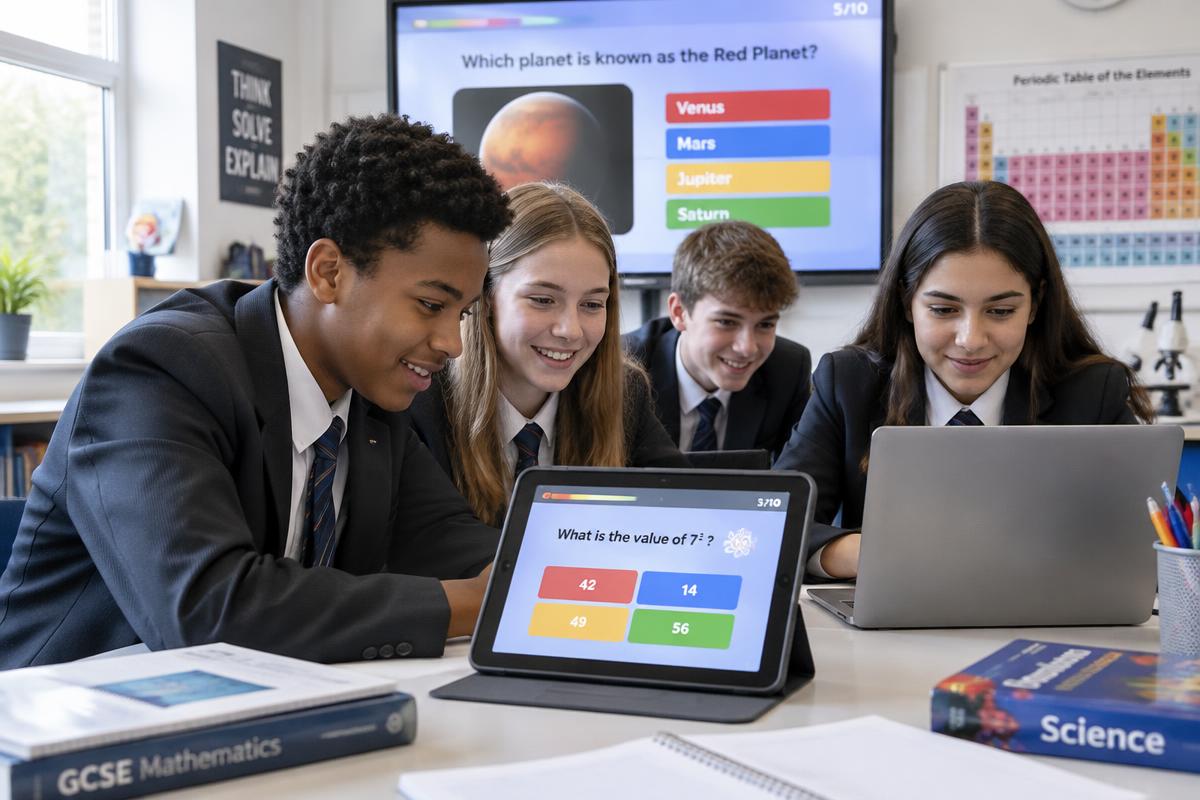
Practice through play
Checking your plan…
Games support practice; they do not replace teaching or formal assessment. A Games Club plan, any SAMU plan or Enterprise unlocks the full library and saves scores.
Play TRAC and Framework clips with captions, adjustable speed and keyboard controls.
How TRAC supports Key Stage 3 study in Years 7, 8 and 9.
Paused: TRAC — introduction